
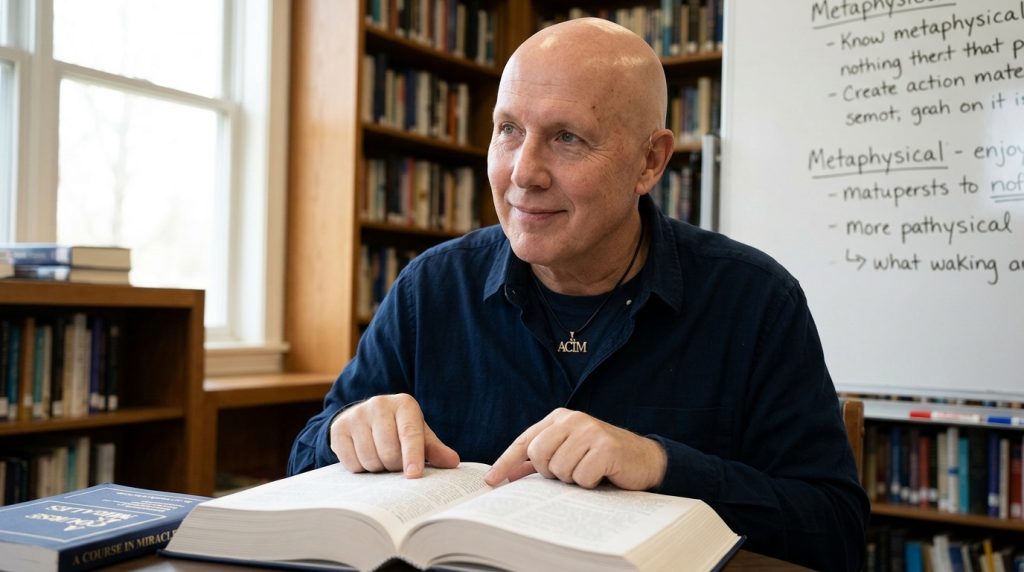
In a world that often feels chaotic and fragmented, many individuals are searching for a deeper sense of meaning and lasting tranquility. Among the various spiritual pathways that have emerged in the last century, one work stands out for its profound psychological depth and its unique approach to personal transformation. Whether you are a long-time student of spiritual philosophy or a newcomer exploring new ideas, Un Cours en Miracles offers a rigorous, self-study curriculum designed to shift your perception and awaken a state of abiding inner peace.
The Origins of a Spiritual Classic
First published in 1976, this material—often referred to as ACIM—is a comprehensive self-study system. It was scribed by Dr. Helen Schucman, a research psychologist, who described the process as a form of “inner dictation.” Over several years, she and her colleague, Dr. William Thetford, compiled a set of teachings that blend profound metaphysical concepts with practical, daily psychological application.
The core premise is deceptively simple: the greatest “miracle” is not a supernatural event, but a radical shift in perception—a move from a state of fear to a state of love. By retraining the mind, the student learns to dissolve the barriers that keep them from experiencing their natural state of peace.
Understanding the Two Thought Systems
The teachings are structured around a fundamental dichotomy: the ego and the Holy Spirit. According to the text, our minds are split between these two systems.
- The Ego: This is the thought system based on fear, separation, and the belief in individual identity as something apart from others and the Divine. The ego thrives on judgment, grievances, and the idea that we are fundamentally lacking or incomplete.
- The Holy Spirit: This represents the “Voice for God” within us—the internal guide that consistently leads us back to truth. It is the bridge between our current perception of the world and our true reality as eternal, unified beings.
The central challenge for a student is to become an impartial observer of their own thoughts, identifying when they are operating from the ego’s fear-based projections and intentionally choosing to align with the guidance of the inner teacher.
The Role of Forgiveness
Perhaps the most distinctive aspect of this teaching is its specific definition of forgiveness. In everyday usage, forgiveness often implies that someone has done something wrong, and we are “letting it slide.” In this curriculum, however, forgiveness is the process of recognizing that the “sin” or the “wrong” was never real to begin with.
It teaches that what we perceive as injuries inflicted by others are actually projections of our own internal guilt. By forgiving others, we are effectively releasing our own internal blocks. This process does not require us to condone harmful behavior; rather, it allows us to see past the behavior to the underlying call for love, effectively neutralizing the power of the ego’s grievances.
A Practical Curriculum
The work is divided into three distinct parts, ensuring that it is not merely a philosophy to be read, but a practice to be lived:
- The Text: Provides the theoretical foundation. It explains the metaphysical framework of the world as an illusion—a “dream”—and outlines the path of awakening.
- The Workbook for Students: This is the heart of the daily practice. It consists of 365 lessons, one for each day of the year, designed to systematically retrain the mind to see the world differently.
- The Manual for Teachers: Offers guidance for those who have integrated the lessons and wish to extend these principles to others.
Why It Remains Relevant Today
In an era of digital noise and rapid societal change, the message of returning to the present moment and choosing love over fear remains as relevant as ever. It does not ask for blind faith or adherence to a specific religion; instead, it invites the student to test its principles through their own experience.
By shifting our focus from changing the world around us to changing our perception of it, we reclaim our agency. We realize that peace is not something to be earned through external circumstances, but an internal inheritance waiting to be uncovered.
As you embark on or continue your own journey of self-discovery, remember that every moment provides a new opportunity to choose again. The path is not always easy, but it is deeply rewarding. By peeling back the layers of fear and ego, you eventually uncover the quiet, steady truth of your own being: you are whole, you are innocent, and you are loved.
When you strip away the complexity of the world’s demands, the ultimate goal becomes clear: to learn how to be a source of healing and clarity in your own life and, by extension, in the lives of those you encounter.
